
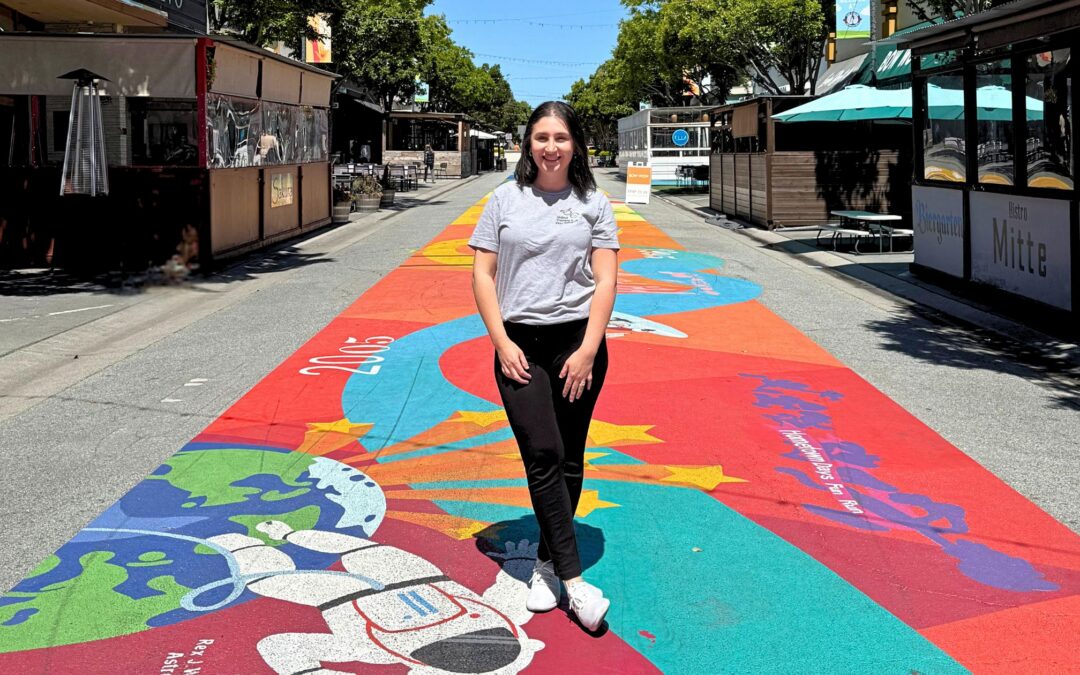
Erin DeNola, Owner of Skilled Therapy & Play Services (STPS)
At Skilled Therapy & Play Services (STPS), swings, games and obstacle courses are serious tools for helping children build confidence, independence and skills for everyday life.
At first glance, it may not look much like therapy.
There are swings and climbing equipment, obstacle courses, games and crafts - spaces designed for movement and play.
A child working on language might talk about their weekend while swinging. Another might practice fine motor skills through a craft or game. Yet another one might learn everyday routines simply by hanging up a backpack, washing their hands and transitioning into the session.
It looks like play because, very often, that's exactly the point.
Behind each activity, however, is a therapist paying close attention to how a child solves problems and respond to the world around them, such as how they move, communicate, or regulate emotions. Activities can change throughout a session depending on what the therapist observes, and what that particular child needs that day.
For STPS founder Erin DeNola, MS, OTR/L, that combination of serious clinical work and childhood play is at the heart of the practice she has built.
And for Erin, the story is especially personal: she was born and raised in San Carlos. “To now have a business in this town,” she says, is particularly meaningful.

Finding Her Calling
Erin initially worked as a behavior therapist at a school serving neurodivergent children. While working there, she was introduced to occupational therapy and quickly realized she had found her calling.
“I knew very quickly that this line of work was my mission,” she recalls.
She went on to earn her master's degree in occupational therapy from Dominican University of California, graduating in 2019. Dominican University's records also show Erin participating in graduate research on the topic of how fear of falling can affect older adults' participation in everyday activities - an early example of occupational therapy's focus on the relationship between confidence, function and daily life.
Her professional focus eventually became pediatrics.
Before founding her own practice, Erin worked in schools and clinical settings, spending time also in hand therapy. She says her experience with children reinforced something that would later become central to STPS: that therapy should not happen in isolation. Skills developed during an appointment have much greater meaning when children can use them at home, at school and in everyday life.
Building the Practice She Wanted to See
Erin says she started Skilled Therapy & Play Services to address gaps she had noticed in traditional pediatric therapy. Among them were limited opportunities for parent education, fragmented services and a lack of coordination among the different professionals working with the same child.
A child might be receiving help with communication in one setting, sensory processing somewhere else and behavior or social development somewhere else again. Yet children do not experience those things separately.
“Children often need support across multiple areas,” Erin explains, including “sensory processing, self-regulation, motor skills, executive functioning, communication, and social development.”
Her goal was to create a place where therapists could collaborate around the whole child rather than treating individual challenges in isolation.
STPS currently offers occupational therapy, speech therapy and behavior therapy, with services available in clinic, at home and in school settings. The practice's current team includes occupational therapists, Board Certified Behavior Analysts, behavior specialists and speech-language pathologists.
The company now operates clinics in both San Carlos and San Mateo.

Why Is There So Much Play?
For those of you unfamiliar with occupational therapy, behavior therapy, or speech therapy, some activities can be surprising. Why is a child swinging when they are working on communication? Why climb through an obstacle course when the goal is to do better at school?
At STPS, Erin says therapists intentionally use child-led and play-based approaches because engagement matters. A child who feels safe, connected and interested in an activity is often in a better position to participate in the work being asked of them.
Also, a session is built around each child's individual goals, strengths and interests.
One child working on coordination might use crafts, handwriting activities or games. Another one who benefits from movement before concentrating might use swings or other movement activities. Yet another child developing greater independence may work on routines that adults barely think about, such as managing a backpack, washing hands or moving comfortably from one activity to the next.
The therapist watches, adjusts and looks for the appropriate level of challenge. The objective is to help the child participate more successfully in life outside the clinic.
The Most Rewarding Thing
One of the most interesting aspects of Erin's approach is how ordinary some of the goals can sound, such as getting dressed, getting out the door for school, playing with another child, or holding a pencil. In general, these activities teach a child how to communicating a need, how to handle a transition without becoming overwhelmed, or how to participate joyfully in a family routine.
These may appear small from the outside. But for the child and family struggling with them every day, they can be enormous.
One of the most rewarding things Erin has hear from a parent is simply that “family life feels easier, less stressful, and more joyful,” especially when parents start seeing a different kind of confidence in their child.
“We have worked with children who initially struggled to participate in school or engage with peers,” she says. Over time, she has watched children become more independent, form friendships and develop greater confidence and self-regulation.


Parents Are Part of the Treatment Team
Another idea runs repeatedly through Erin's philosophy: parents should understand what is happening and why. She describes parent education, family dynamics and collaboration as foundational pieces of the practice.
She also emphasizes helping caregivers understand the reasons behind their child's strengths and challenges so progress can extend beyond the therapy room.
That can mean explaining to them the concepts involving the nervous system, motor development or behavior in understandable language. It also means helping parents recognize what is happening before a difficult transition, or giving them strategies they can actually use at home with their child.
The practice's current service descriptions include parent and caregiver education as well as school, community and home-based support.
The underlying message is simple: a child spends only a small portion of the week inside a therapy room.
The rest of life happens with family and friends.
A Different Financial Model
STPS is also unusual in another respect. It operates primarily through an out-of-pocket, out-of-network model rather than allowing an insurance company's coverage rules to determine every aspect of treatment.
Erin says that decision was intentional. “Remaining out-of-network allows us to make clinical decisions based on a child's needs rather than insurance limitations,” she explains.
According to STPS, the model gives clinicians greater flexibility in setting treatment goals, determining frequency and collaborating with families and schools. Some services may have options for insurance reimbursement, although families should confirm their individual benefits and reimbursement eligibility directly with their insurer and the practice.
For families, of course, that flexibility has to be weighed against cost. Out-of-network care can involve substantially greater direct expense, so parents considering services should understand fees and possible reimbursement before beginning treatment.
What Should Parents Look For?
“Every child develops differently,” Erin says. Rather than looking only at a diagnosis or therapy label, she encourages families to find professionals who see the whole child, involve the family and build goals around activities that matter in real life.
It is also reasonable for parents to ask questions:
- What does the therapist hope to accomplish?
- How will progress be measured?
- How will parents be involved?
- Will the therapist communicate with teachers or other providers when appropriate?
- Most importantly, how does the child respond to the environment and the person working with them?
Because therapy can be clinically sound and still need one more essential ingredient: trust.

Underneath all the Clinical Terms
Erin has built a practice around an idea that, in many ways, sounds surprisingly simple: understand the child first.
Today, Skilled Therapy & Play Services works with children who may need support in areas including sensory processing, motor development, language and communication, behavior, self-regulation, executive functioning and social skills.
But underneath all of those clinical terms is something more recognizable to any parent: the relief, pride, and joy of watching their child flourish in ways they once only hoped for.
For more blogs, visit San Carlos Life Blog
About Skilled Therapy & Play Services


A Sensory and Play Based Pediatric Therapy Group Occupational Therapy, Speech Therapy, and ABA services designed to create meaningful, lasting outcomes. A family and child-first model rooted in individuality, collaboration, and play!
Phone: 650-206-9468
Email: info@skilledtherapyplay.com
Website: skilledtherapyplay.com
Clinic Addresses:
300 El Camino Real, San Carlos151 W 20th Avenue, San Mateo