
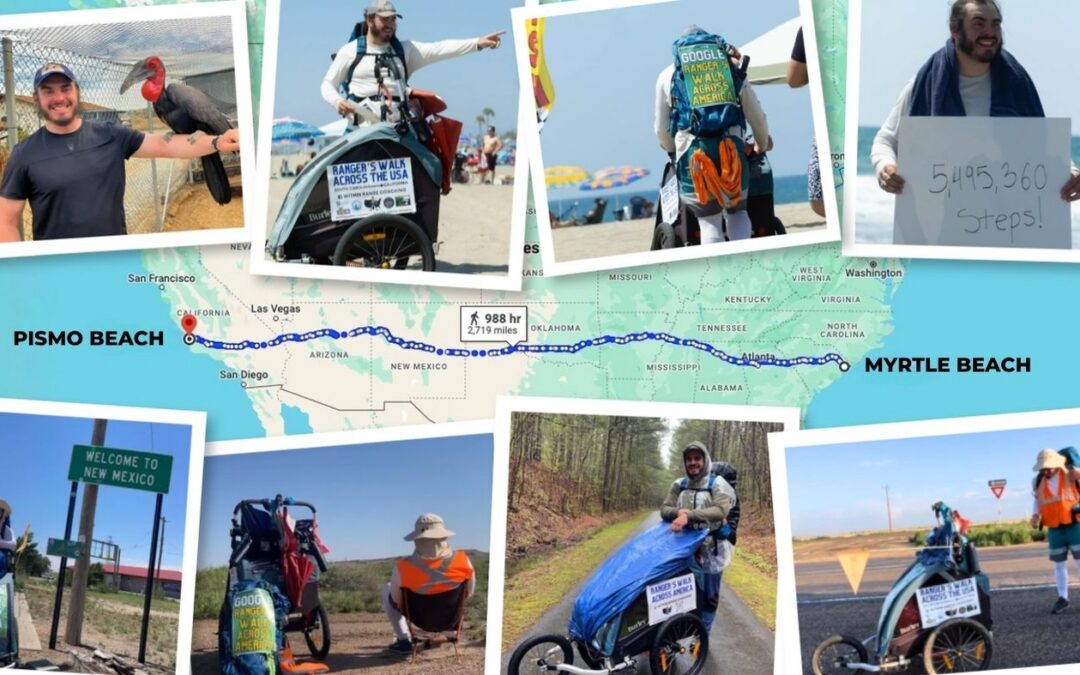
Photos of Ranger Kielak during his “Walk Across America”
At mile 40, before sunrise, Andrew “Ranger” Kielak nearly stopped.
There is a particular kind of exhaustion that rearranges a person’s thinking. It accumulates silently, settling first into the body, then pressing on everything else.
By then, Ranger had been walking for close to 20 hours along the Half Moon Bay coast. The cold air worked into his legs. Even standing still took effort because of the wind. He had been holding onto a small expectation to keep himself moving: he wanted to watch the sunrise over the ocean by the time he reached his destination.
Then he realized – he was on the WRONG coast.
He sat on a bench and felt everything arrive at once: the fatigue, and the uncertainty of his younger brother’s recovery, and the limits of his own effort. His brother, JJ, had suffered an arteriovenous malformation rupture months earlier and was left unable to walk or talk, having been in a coma for weeks. His brother was the reason he did this ‘endurance walk’.
As anxious thoughts ran through his head, Ranger got sick and threw up. He considered stopping. He nearly called for help.
What brought him back was a memory. A photo of him and his siblings in Spider-Man costumes. He realized, “If I quit now because it hurts too much, I’m saying it’s okay to give up when things get hard. What kind of message is that to JJ? As he goes through physical therapy?”
So Ranger stood up, and walked 10 more miles to the finish his goal.
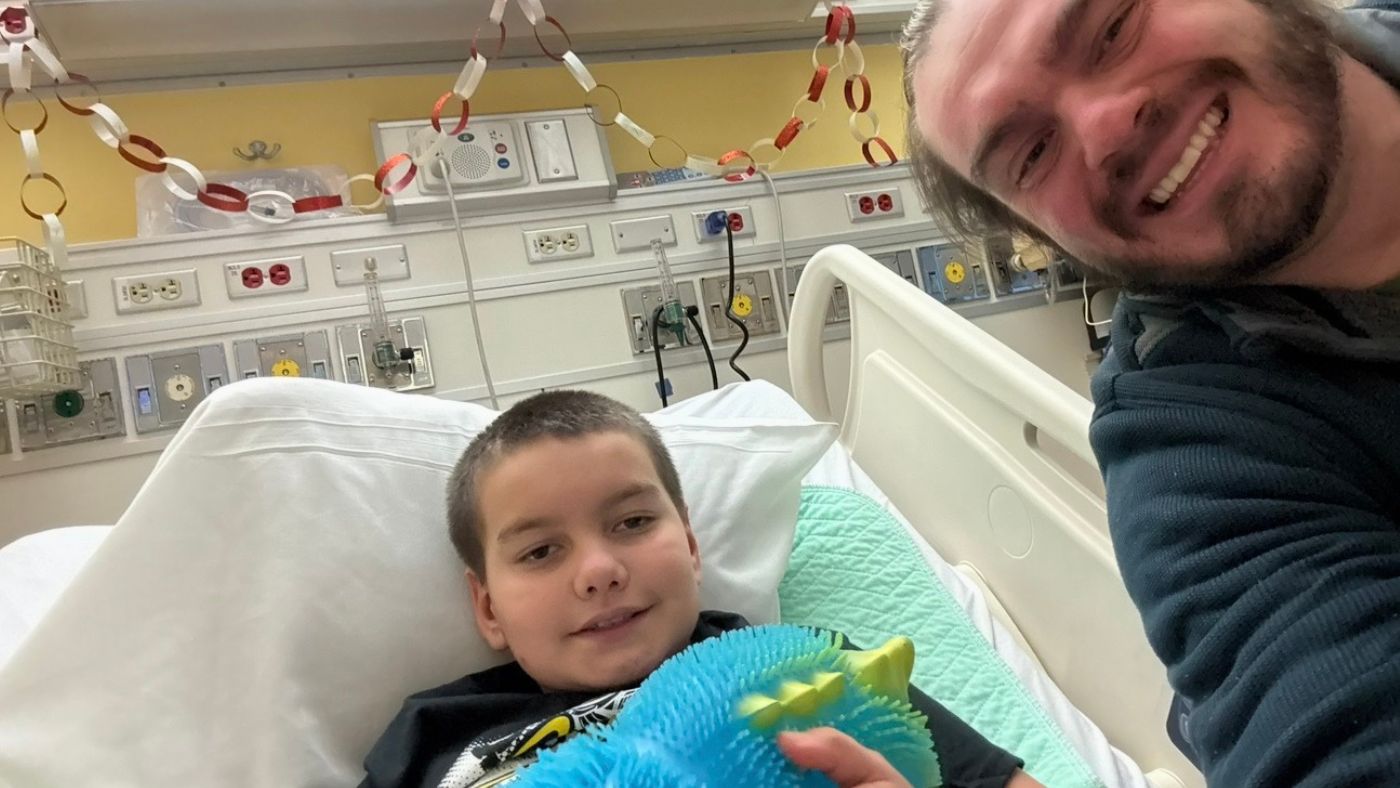
Ranger with his younger brother JJ.
The Story Beneath the Miles
Ranger’s endurance walk is easy to summarize in numbers.
From March 10 to August 31, 2024, he walked 2,642 miles across the United States, taking roughly 5.5 million steps from Myrtle Beach, South Carolina to Los Angeles, California. He moved largely on foot along highways and connecting roads, pushing a cart that carried his gear, navigating stretches where safety wasn’t guaranteed and resources weren’t always available. Along the way, he recorded 33 podcast conversations, stopping in towns and cities to speak with people building something meaningful in their communities. He later completed another 24-hour endurance walk along the Half Moon Bay coast to raise awareness and support for his younger brother’s recovery.
Why exactly did he do this walk across America and others that followed? As Ranger explains it, it was “a web of whys.”
There was a period in college when things weren’t going well for him. There was the death of his grandfather from Alzheimer’s, and the realization that a life could be fully lived and still, in the end, forgotten. There were small, almost dismissible moments, seeing others walk across America and thinking: “not me”. Until, gradually, that thought changed.
In July 2022, Ranger texted his girlfriend (who is now his fiancée): “I think I really want to do it.” Her response was simple: “Ok. What’s the first step?”
That was enough. Knowing he had her support pushed him over the edge.
So, on March 10, Ranger took the first step on Myrtle Beach, arriving in Los Angeles five and a half months later.
However, when he speaks about the walk, the pride of achievement and the numbers recede quickly. What takes their place are memories of people: the ones who offered a place to sleep. The ones who shared meals. The ones who helped when help wasn’t guaranteed.
“The walk taught me what I set out to prove,” he says. “THERE ARE GOOD PEOPLE OUT THERE.”
It’s something he tested for himself, across long stretches of road and repeated encounters with kind people over 2,642 miles.
Endurance, Reframed
Endurance is often described as toughness. The ability to withstand. Ranger however describes it as clarity: a willingness to keep responding to what’s in front of you.
Long stretches of walking strip away distraction. There is less room for avoidance. What remains is often uncomfortable, but precise.
He realized, distance mattered less than the decision to keep going. That decision repeats: step by step, one moment at a time. Not just on the road, but in smaller contexts. Staying present, curious. Just keep going.
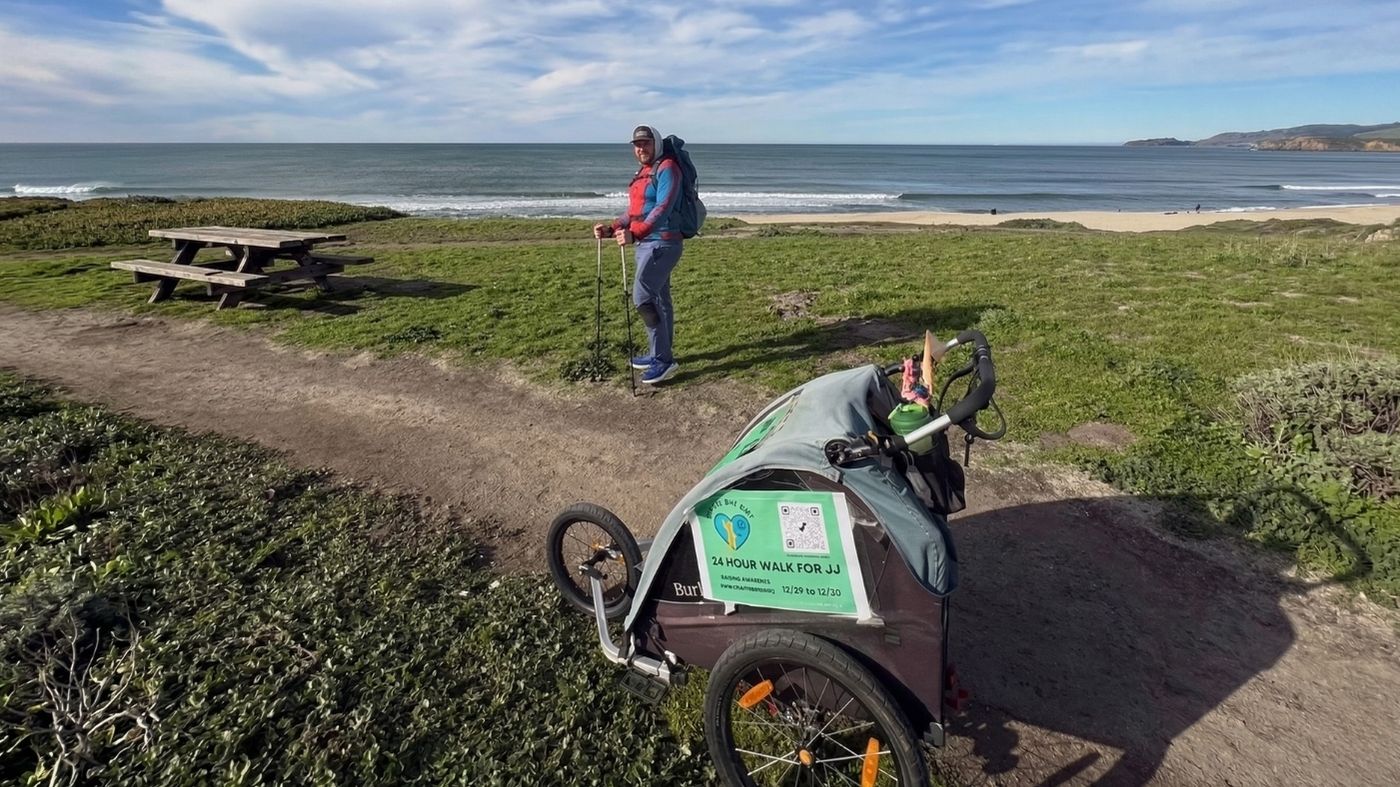
Ranger during his “24 Hour Endurance Walk”
A Mind Trained in Complexity
Ranger grew up in Chilcoot, a small town in Northern California, the kind of place he describes as “head to the middle of nowhere, then turn left.”
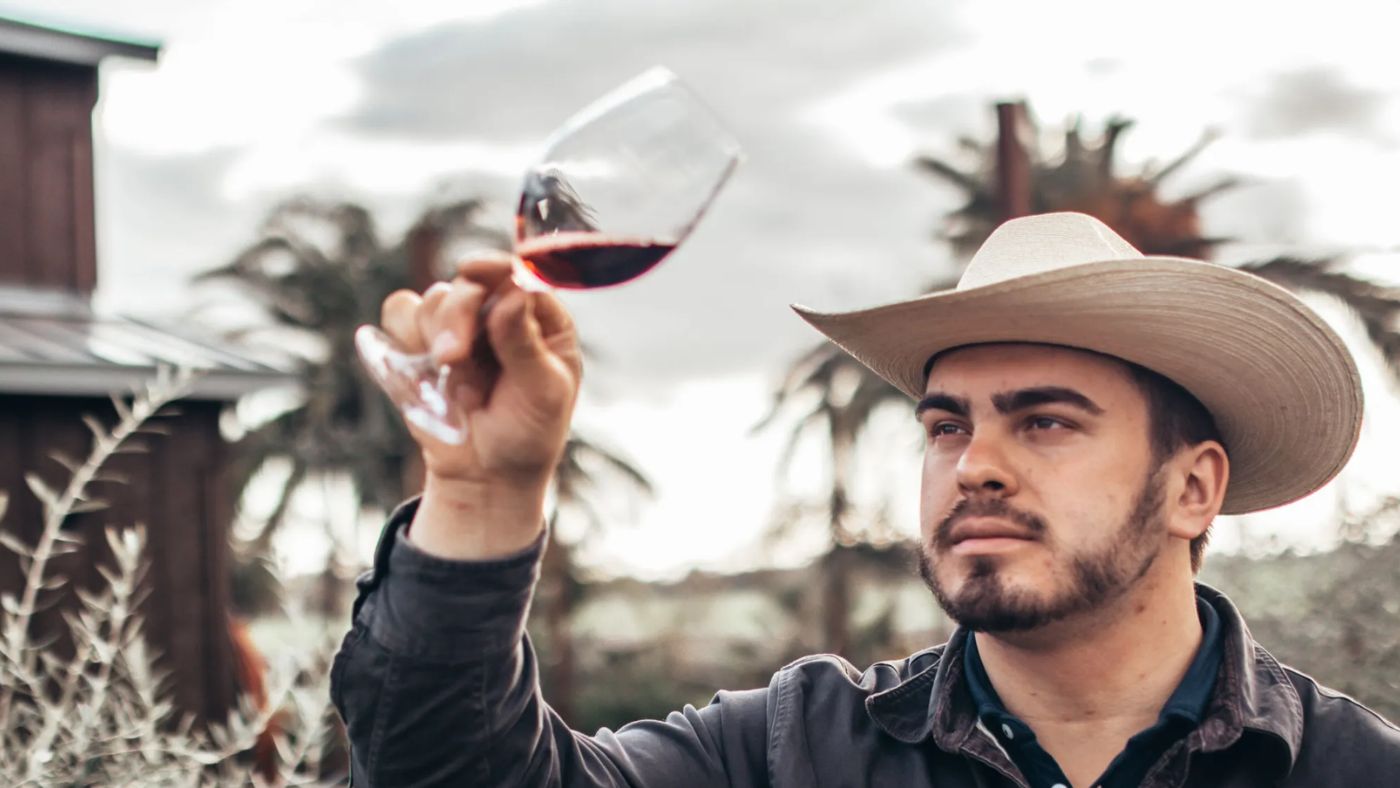
He studied agricultural economics at UC Davis, originally planning to become a veterinarian before realizing the broader agriculture industry felt more aligned. After graduating, he worked in restaurants and wine, in fields, tasting rooms, and cellars, before eventually becoming a county agricultural inspector in Stanislaus County, focusing on pesticide use enforcement.
It is a profession that doesn’t allow for simple thinking.
“What I truly love about farming and the ‘ag’ industry is that there’s never just ONE right answer,” he says. “It’s always a dichotomy to be managed rather than a single choice to be made.”
Agriculture, as Ranger describes it, exists in tension primarily between public perception and lived reality. He often returns to a quote that captures that gap: “Farming looks mighty easy when your plow is a pencil and you’re a thousand miles from the corn field.”
“Add regulations, training, economics, and constantly evolving technology, and farmers are navigating an incredibly complex landscape every single day,” Ranger says.
From Fields to Front Doors
His work as an inspector changed how he understands risk.
“My work as a pesticide inspector opened my eyes to a crucial gap in public awareness,” he says. “We focus heavily on pesticide safety in agriculture, but most people don’t realize the pesticides in their own homes and gardens can pose serious health risks.”
That realization expanded his focus.
Today, part of his work includes “Safe at Home Pesticide Audits,” helping homeowners identify exposure risks in everyday environments, including links to serious conditions like Parkinson’s disease.
“This connects directly to my broader mission: cultivating a better agriculture through education, safety, and compliance. Agriculture IS community.”
Agriculture, in fact, was the age-old system that allowed people to settle, to build, to move beyond survival.
“Safety doesn’t stop at the farm gate,” Ranger said. “If we can help families understand and reduce pesticide exposure in their daily lives while supporting farmers in sustainable practices, we strengthen the entire community from soil to supper table.”
He is also working to expand access to that knowledge, including a Spanish-language podcast, “Seguro en el Campo,” focused on pesticide safety for farmworkers, those closest to the land and often the most exposed.
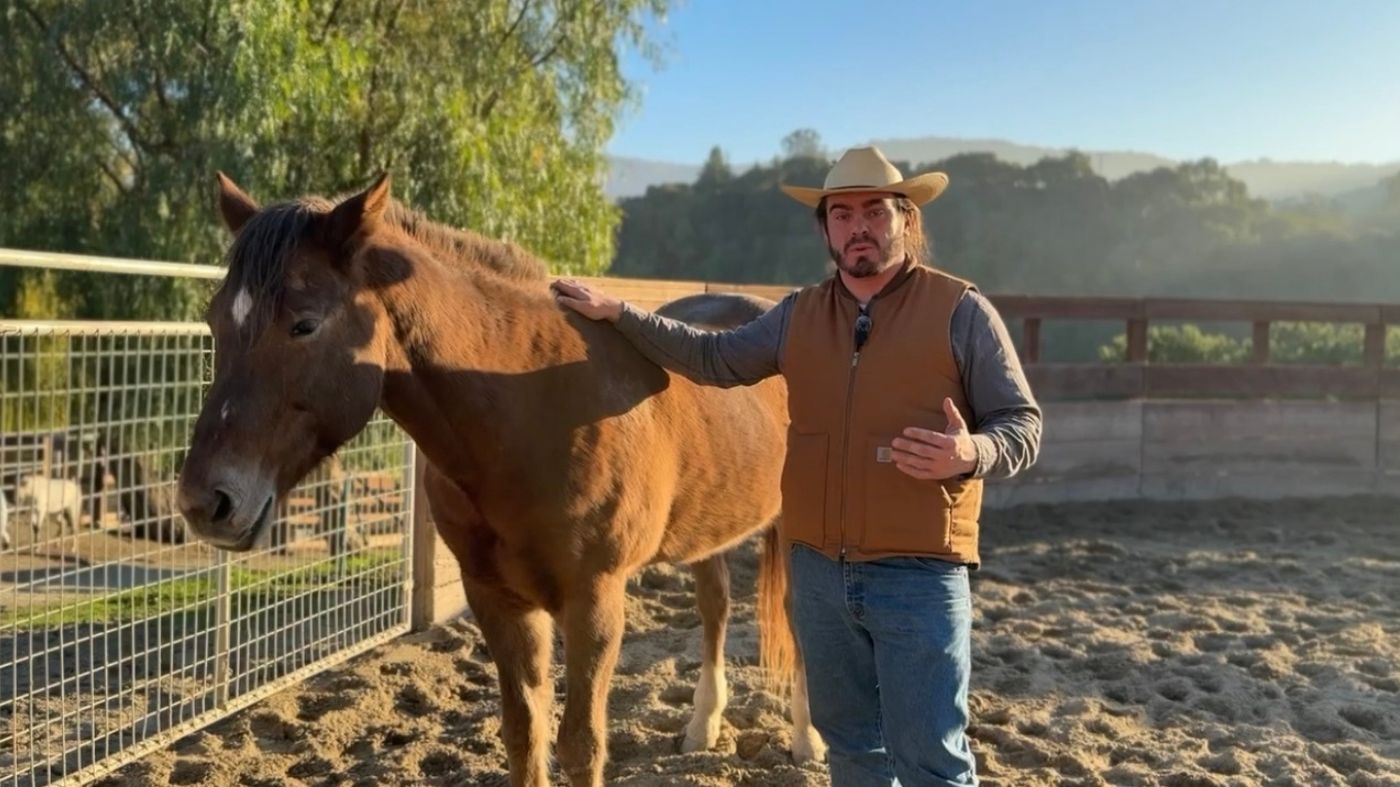
Ranger during one of his Coaching Seminars “Taming the Inner Critic with Horses”
Coaching: Where the Work Turns Personal
Aside from agriculture, Ranger is also into business coaching. Coming from a world where farming demands constant trade-offs and no single right answer, Ranger didn’t set out to become a traditional coach. He set out to guide people the same way he learned to think in agriculture: through real situations, lived experience, and questions that don’t have easy answers.
“I’ve always loved teaching, but I’m not a ‘teacher in the classroom’ type,” he says. “I’m more drawn to experiential education—workshops, mentoring, helping people grow one-on-one and in small groups.”
That preference shows up in how he works: conversations on farms, sessions in small groups, learning that happens through doing rather than listening. The path into coaching became clearer for him during COVID, when he hired a coach himself and saw how much could change when someone is asked the right questions.
“I realized THAT was the impact I wanted to make.”
He sees entrepreneurship not just as business-building, but as a mirror. “I believe entrepreneurship is the ultimate form of personal development.” The work, as he describes it, isn’t separate from the person doing it. Growth in one area inevitably pressures growth in the other.
His mission is simple, but not small. “Helping people build a life worth remembering.” When his grandfather passed away from Alzheimer’s, he learned how much of a life can disappear from memory. It shifted how he thought about legacy.
Instead of building something that lasts beyond you, he began to think about building a life that feels meaningful while you’re still living it. That perspective shapes how he shows up with clients. The question he returns to, again and again, is direct: “What do YOU want?”
Across the people he’s worked with, he’s noticed two patterns that make the biggest difference: “Being present and staying curious.”
Focus where your feet are. Listen without an agenda. Letting answers emerge instead of forcing them.
In the end, his definition of success circles back to the same idea that guided his walk.
“Success for me isn’t about metrics—it’s about the frame I make decisions with: ‘Does this align with who I truly believe I am?’”
Regeneration as a Way Forward
The same questions that shape his coaching began to take on a different form one summer.
He was reading Dirt to Soil by Gabe Brown, a book about regenerative agriculture, about rebuilding soil after years of depletion. Sitting on a boat on a lake up north, something clicked.
The principles weren’t just about land. They applied to people.
“The conventional ‘churn and burn’ system leads to burnout,” he says. “What if we applied regenerative principles that focus on purpose and why?”
In his work with clients, he asks people to understand themselves before trying to optimize anything else. Regenerative thinking, for him, is an extension of that. Not extracting more effort, but restoring what’s been worn down.
He has started putting that into practice through workshops built around lived experience rather than theory. One of them, developed in partnership with Joan Brennan of “Leading with Horses”, brings professionals into an environment that looks nothing like a traditional seminar.
About the coaching seminar, “Regenerative Leadership: Taming the Inner Critic with Horses,” which happens at Westwind Community Barn in Los Altos, participants learn to lead horses without force, regulating ones self before trying to direct them. It echoes what Ranger learned during the walk; that progress doesn’t come from pushing harder all the time, but instead from staying grounded enough to keep going.
He calls this broader idea “Agri-Transformation.” Where agriculture meets personal development.
“We learn about ourselves while learning about the land,” Ranger says. “We dig up the excuses in our minds while digging up weeds in the garden. We learn to lead ourselves while learning to lead a horse.”
The structure is simple, but the work isn’t. It asks people to slow down, to reconnect effort with meaning; and to step out of systems built on output, and into something more sustainable.
Over the next several years, Ranger hopes to expand this into something larger. Retreats. Educational programs. A community built around people who want to grow in a way that lasts.
What the Walk Leaves Behind
It would be easy to tell Ranger’s story as one of extremes. Distance. Duration. Physical limits. But that version misses the more important thread: human connection. Between people who meet briefly and still matter. Between intention and action.
For Ranger, success isn’t something you count. “My walk wasn’t about the 2,642 miles,” he says. The distance is only a piece of the story. Over time, numbers and accolades lose their weight, while the people you love, and the people who show up for you, remain. And then there are countless others you meet along the way, the many reminders that there are good people out there.
If you can’t seem to find one, Ranger adds,
Just look in the mirror.
PS: Today, Ranger’s younger brother is doing much better. He’s in physical therapy, slowly learning to walk again. His spirits are higher, and he carries a sense of humor about it—the kind only a 9-year-old can have.
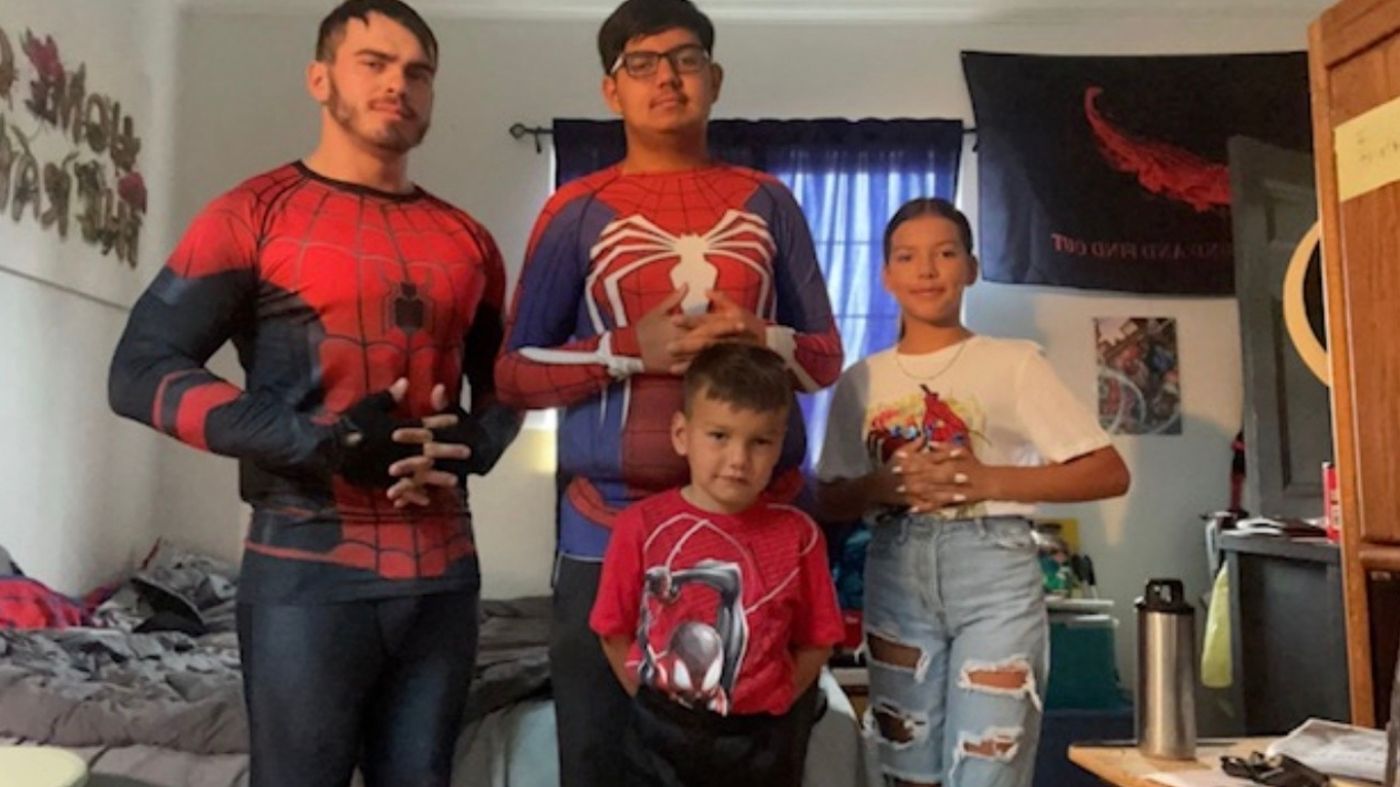
Ranger’s photo of his siblings.
Check out Ranger’s podcasts:
- South of SF highlights the amazing business owners, nonprofits, and community members in San Mateo County and the SF Peninsula
- The Foggy Farmer shares real stories from farmers, producers, and ag professionals. Ranger’s interviewed ranchers, ag automation experts, and educators
- The Growth Point Podcast focuses on lessons and stories to help ag producers build sustainable, profitable, and compliant operations
- The Never Peak Project unpacks what’s really behind burnout, comparison, and the “not enough” feeling – and gives you the mindset, identity, and strategy tools to keep climbing.
For more blogs, visit San Carlos Life Blog
About Within Range Coaching
Within Range Coaching helps farmers navigate regulations, entrepreneurs build sustainable businesses, and professionals find clarity in work and life.
Their approach is rooted in regenerative agriculture: tend to what matters, remove what doesn’t serve you, and trust the process.
Phone: 650-479-4398
Email: rangercoaching@gmail.com
Website: withinrangecoaching.com